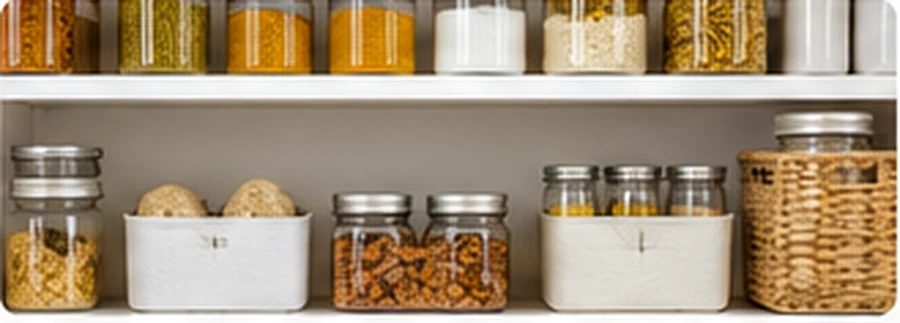
A beautifully decanted pantry can be satisfying to look at, but it can also be expensive, labour-intensive and harder to maintain than a simple shelf. Before you order a set of containers, take stock of what you cook and how often you use it. The most useful pantry layout reflects your real shopping and cooking habits.
Empty a manageable section
Choose one shelf and group its contents into things you use regularly, occasional ingredients and duplicates. Check dates and packaging, and follow food-safety guidance for spoiled or unsafe products. Keep any allergen and preparation information you need accessible. You don't have to replace original packaging with jars; packaging can be useful for instructions, dates and identification. Starting with one shelf prevents the project taking over the kitchen.
Put frequent ingredients where you can see them
Everyday breakfast foods, cooking staples and snacks should be easy for the people who use them to reach. Less-used baking supplies can sit higher or farther back where safe. Heavy containers belong on sturdy, lower shelves. If the pantry is deep, small groups on shallow trays may help you pull items forward without losing track of what sits behind. Avoid blocking ventilation where applicable.
Don't decant for the sake of it
Airtight containers can be useful for particular dry goods, especially where pests or moisture are a concern. If you decant, label the contents and preserve best-before dates and cooking instructions, particularly for products with allergens. Choose food-safe containers suited to the item and follow cleaning instructions. A row of unlabelled white powders is not a practical storage system, however polished it looks.
Create a tiny 'use next' area
A small basket or marked shelf for open packets and ingredients approaching their best-before date can reduce forgotten food. This is not a guarantee of food safety: use the correct distinction between use-by and best-before dates and follow safe storage guidance. Build meals around what you already have when appropriate. The goal is to make ingredients visible enough to be used before new duplicates are bought.
Keep the system easy to restock
When groceries arrive, move older suitable stock forward and put new items behind it. Leave breathing room rather than stacking every shelf tightly. You can note a frequently forgotten staple on a small shopping list. After a fortnight, review which categories have migrated. That tells you more about your pantry than a single perfectly styled photograph.